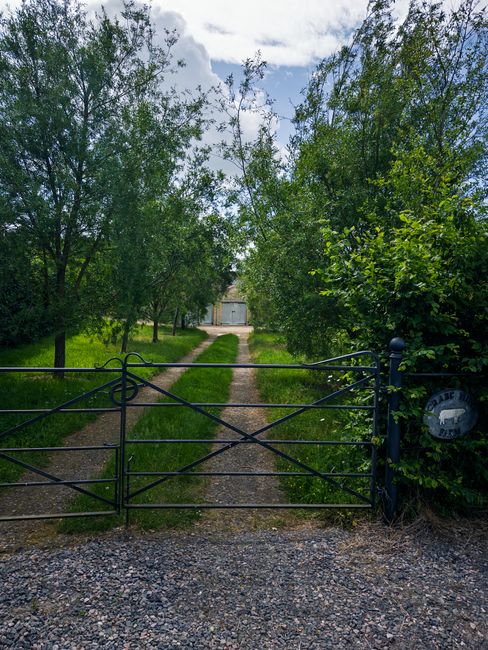
Gardeners Earls Court Road driveway access and gate rules

Getting garden work done sounds simple until the practical stuff appears: a narrow driveway, a heavy gate, a neighbour's car parked half over the line, and a mower that will not magically squeeze through a gap that is, frankly, too tight. That is where Gardeners Earls Court Road driveway access and gate rules really matter. If you are planning routine maintenance, hedge work, tree care, or a full garden refresh, access is not just a convenience issue. It affects timing, safety, cost, noise, and how smoothly the whole job runs.
In a busy London setting, small details make a big difference. A clear route, sensible gate handling, and a shared understanding of boundaries can save a lot of stress. This guide breaks down how access works, what rules usually matter, what to check before the team arrives, and how to avoid the little mistakes that turn a tidy day's work into a muddle.
Why Gardeners Earls Court Road driveway access and gate rules Matters
On paper, driveway access and gate rules may sound like housekeeping. In real life, they shape how the whole job unfolds. If a gardener cannot bring tools close to the work area, more time is spent carrying equipment, waste, compost, and cuttings back and forth. That may not seem dramatic, but by the end of a long day it can slow everything down. It can also increase the risk of damage to paving, borders, planting beds, and the gate itself.
For properties near Earls Court Road, the issue can be even more noticeable because access points are often shared, compact, or awkwardly aligned. A gate might open inward and block a passage. A driveway may be sloped or have tight turning space. Some homes have side access that is excellent for a person on foot but not ideal for wheelbarrows, bags of soil, or larger landscaping materials.
There is also the human side of it. If you are at work, or a tenant is on site, no one wants constant back-and-forth calls about where to park, which gate to use, or whether the team may leave the side latch open for five minutes. A clear access plan keeps everyone calmer. Simple as that.
For bigger projects, it connects directly to services such as regular garden maintenance, hedge trimming, and tree surgery, where equipment movement and waste removal are part of the day's work.
How Gardeners Earls Court Road driveway access and gate rules Works
Most access arrangements are built on a few practical questions: Can the team reach the work area easily? Can they move safely? Can the gate be opened, secured, and closed without issue? Everything else flows from there.
In practice, the process usually looks like this:
- Initial check - The property owner or occupier explains how the driveway and gates work, including any shared access, coded locks, self-closing latches, or timed restrictions.
- Site-specific planning - The gardening team decides whether tools, mowers, cuttings, ladders, or heavier materials can pass through without damaging surfaces or plants.
- Gate protocol - The gate is opened only as needed, kept secure when unattended, and left as found unless an agreed arrangement says otherwise.
- Access route protection - Vulnerable surfaces are protected where sensible. For example, repeated wheelbarrow runs over soft gravel may need boards or mats.
- Waste and exit plan - Cuttings, bags, and debris are moved out in a way that avoids blocking doors, paths, or shared drive space.
One thing people often overlook is that access is not just about entry. It is also about movement inside the site. A gate might be wide enough, but if the turning angle is poor, the job still becomes fiddly. That is where a short pre-visit chat helps more than most people expect.
If the work is broader than a quick tidy-up, it may also involve services like landscaping support, fencing work, or even decking improvements, all of which can depend on sensible access and secure boundary control.
Key Benefits and Practical Advantages
When driveway access and gate rules are handled well, you notice the difference almost immediately. The day starts on time. Tools arrive where they need to go. Waste leaves without a fuss. And the site feels looked after rather than disrupted.
- Less disruption - fewer pauses, fewer awkward movements, fewer "can we just squeeze through here?" moments.
- Better protection for surfaces - gates, paving, gravel, lawns, and timber features are less likely to get scuffed or dented.
- Improved safety - fewer trip hazards and fewer awkward manoeuvres with sharp tools or heavy containers.
- Faster work - efficient access means more time on the actual gardening, less on logistics.
- Clearer expectations - everybody knows who opens what, where items can be placed, and what happens at the end of the visit.
There is a quieter benefit too. Good access etiquette simply feels professional. You can tell when a garden team has done this before. They move with purpose, keep gates controlled, and tidy their route as they go. It gives the whole property a more settled feel.
For ongoing grounds care, this is especially useful if you are combining lawn care with lawn mowing or seasonal tidy-ups through general gardening services.
Who This Is For and When It Makes Sense
This topic matters to more people than you might think. It is not only for large gardens or properties with grand front driveways. In fact, the trickiest access arrangements are often the smallest ones.
You will want a clear access plan if you are:
- a homeowner with a narrow side gate or shared driveway;
- a landlord arranging work for tenants or after a changeover;
- a property manager coordinating external contractors;
- someone with limited parking or restricted turning space;
- a busy household where dogs, children, and deliveries all use the same outdoor route;
- a customer booking work that creates waste, such as pruning, clearance, or turf replacement.
It also makes sense before seasonal jobs. Spring and early summer are the obvious ones, but autumn leaf clearance and winter boundary checks can be just as dependent on access. Truth be told, many access problems only show up when the weather turns wet and a wheelbarrow starts slipping on a damp path. That is when everyone wishes the plan had been a bit clearer.
If you are also thinking about privacy screening or boundary improvements, you may want to look at privacy hedge ideas and hedge shaping guidance, because access and boundary layout often influence one another.
Step-by-Step Guidance
Here is a straightforward way to prepare for garden work when driveway access and gate rules matter. Nothing fancy. Just the sort of common-sense approach that saves time later.
- Walk the route first
Stand at the entrance and follow the exact path tools and waste will take. Look for tight corners, low branches, steps, loose paving, or anything that could catch a wheel or a boot. - Measure the narrow bits
If a mower, sack barrow, ladder, or large planter needs to pass through, check the width. Do not guess. A few centimetres can decide whether the job feels easy or awkward. - Check how the gate behaves
Does it stick? Does it swing too far? Does it self-close sharply? Is there a latch that needs a key or code? Little things like that matter more than they should, but there we are. - Agree who handles the gate
Decide whether the client, a resident, or the gardening team will open and secure it. If it is a shared access point, make sure everyone knows the routine. - Protect the surfaces
Where appropriate, use covers, boards, or simple mats to reduce wear on paving, gravel, decking, or lawn edges. - Make space for waste
Plan where cuttings, soil bags, and trimmings will be stacked temporarily so the route stays usable. - Keep neighbours in mind
If access affects a shared path or parking bay, a quick heads-up can prevent a small misunderstanding from becoming a bigger one. - Review at the end
Check that the gate is secure, the route is clear, and nothing has been left leaning against fencing, railings, or plants.
A small example: if a gardener is scheduled for hedge work along a boundary, a clean route to the rear garden can be the difference between a tidy one-hour setup and ten minutes of awkward carrying. Not dramatic, just real.
Expert Tips for Better Results
The best access plans are usually the simplest. Here are the habits that make the most difference in day-to-day work.
- Keep the route as short as possible - every extra step matters when you are carrying clippings, bags, or tools.
- Leave the gate instructions written down - a code, key location, or preferred gate should not rely on memory alone.
- Do not overload the access point - if parking blocks the route, the whole garden day slows down.
- Use clear names for entrances - front gate, side gate, rear access, service path. Simple labels reduce mistakes.
- Plan for wet weather - in London, a dry route can become slippery quickly. Mud and wet leaves are no joke.
- Think about waste before work begins - it is easier to plan exit space in advance than to create it mid-job.
- Keep pets and children in mind - if the gate will be open, make sure the site plan accounts for them.
One practical tip that gets overlooked: if your hedge or boundary planting crowds the gate line, trim it back before heavier work starts. That is one reason services such as professional hedge trimming can make access smoother, not just prettier.
And if the boundary itself is part of the problem, a discussion about garden fencing can be useful before any bigger access changes are planned.
Common Mistakes to Avoid
Most access problems are not disasters. They are just small avoidable lapses that add friction. Here are the ones that show up again and again.
- Assuming the gate is "fine" when it actually sticks, drops, or scrapes the floor.
- Forgetting about turning space for wheelbarrows, loaders, or bulky waste bags.
- Leaving parked vehicles in the way, especially on busy streets where moving them later is awkward.
- Not mentioning shared access with neighbours or other occupants.
- Failing to mention security issues, such as a loose lock, coded entry, or a gate that must remain shut.
- Allowing plants to overgrow the path, which makes both access and plant protection harder.
- Waiting until the team arrives to explain the route. That one causes more delay than people like to admit.
Another subtle mistake is thinking the access route only matters for big jobs. It matters even for routine maintenance. A simple lawn visit can become clumsy if the mower has to be carried through a cramped side entrance and back out again with wet clippings in tow. Not ideal.
Tools, Resources and Recommendations
You do not need a warehouse full of gear to manage access well. Most of the helpful tools are basic, and some are just good organisation.
| Item | Why it helps | Best used for |
|---|---|---|
| Measuring tape | Checks gate widths and narrow passages accurately | Planning access for mowers, barrows, and materials |
| Gloves | Useful for opening older or rough gates safely | Manual handling and boundary checks |
| Doorstop or gate prop | Helps keep access open during agreed work periods | Short tasks where the gate must stay open briefly |
| Protective mats or boards | Reduces wear on soft or sensitive surfaces | Wheelbarrow routes, gravel, timber decks |
| Written access notes | Stops details getting forgotten | Keys, codes, preferred entrances, neighbour considerations |
| Wheelbarrow or garden trolley | Makes repeated trips less tiring | Clippings, compost, soil, cut branches |
For some properties, the best "tool" is simply a well-timed garden visit. If access is tight, booking work in a quieter slot can make the whole visit more relaxed. A calmer street, fewer cars, less pushing and pulling. It all helps.
Depending on the job, these pages can also be useful starting points: patio cleaning for hard-surface refreshes, and lawn care if the work is mainly about turf health rather than access-heavy clearance.
Law, Compliance, Standards, or Best Practice
This subject is not usually about a single dramatic law. It is more about responsible working practice, reasonable access, and not creating hazards for people or property. In the UK, that normally means taking care around gates, paths, shared driveways, and anyone who may pass through the area while work is under way.
Good practice typically includes:
- keeping access routes free from unnecessary obstruction;
- making sure gates are not left open where children, pets, or the public could wander through;
- avoiding damage to surfaces, boundaries, and neighbouring property;
- using sensible manual handling when moving materials through tight spaces;
- communicating clearly when access is shared or time-limited.
If a gate has a lock or security feature, it should be handled carefully and only with permission. If a property has shared access, the people involved should know who is responsible for opening, closing, and securing it. That part may sound obvious, but it is often where things go sideways.
Where tree work, heavier pruning, or larger clearance is involved, it is sensible to use a trained team that understands safe movement, site awareness, and the need to keep entrances secure. That is especially true for work tied to tree surgery or larger-scale landscaping projects.
Options, Methods, or Comparison Table
There is no single right way to manage driveway access and gate rules. The best method depends on the size of the site, the type of work, and how often the space is used. Here is a simple comparison.
| Access approach | Best for | Pros | Limitations |
|---|---|---|---|
| Fully open access during work | Clear, private gardens with good visibility | Fast and efficient, easy movement | Less secure if left unattended |
| Controlled access with agreed opening times | Shared driveways or properties with security concerns | Balanced security and efficiency | Needs good communication |
| Single-person entry with the gate closed behind | Tight urban sites or homes with pets | More secure, better control | Slower for repeated trips |
| Protected route using boards or mats | Soft ground, gravel, or fragile surfaces | Reduces wear and mess | Requires a little setup time |
For many Earls Court Road properties, a controlled access model is the sweet spot. It is secure, practical, and respectful of neighbours. And honestly, that is usually what people want: nothing overcomplicated, just a clean plan that works.
Case Study or Real-World Example
Here is a realistic scenario. A property off Earls Court Road has a narrow side gate leading to a back garden with an uneven path and a small storage area near the house. The owners want hedge trimming, some light clearance, and a general tidy-up before guests arrive later in the week.
At first glance, the job looks straightforward. But the access route has a few quirks: the gate opens inward, a recycling bin sits close to the turning point, and the path narrows beside a planted bed. If the team arrived without a plan, they would likely spend time shuffling items around and reopening the gate repeatedly. Not a disaster, just inefficient.
Instead, the access is planned in advance. The bin is moved. The gate is left propped only while equipment is being brought through. The route to the rear is kept clear. Cuttings are collected in a set area near the exit so they can be removed in one tidy run. The work still takes effort, but the day feels orderly rather than interrupted.
This is the real value of access rules. They do not just help the gardener. They protect the property, reduce stress for the occupants, and make the whole visit feel more considered. The garden ends up looking better, yes, but the process feels better too. There is a difference.
Practical Checklist
Use this before any scheduled visit where driveway access and gate rules matter.
- Check which gate or entrance should be used.
- Confirm whether the access is shared or private.
- Make sure keys, codes, or latches are available.
- Measure any narrow points if large tools or waste need to pass through.
- Clear parked vehicles, bins, toys, and temporary obstacles.
- Trim overgrowth that crowds the gate or route.
- Decide where cuttings and waste will be staged.
- Protect sensitive surfaces with mats or boards if needed.
- Tell neighbours if shared access may be affected.
- Confirm how the gate should be secured when work pauses and when it finishes.
- Keep pets and children away from open access points.
- Do a final walk-through once the work is complete.
Expert summary: good access planning is rarely about perfection. It is about removing friction before it starts. A clear gate routine, a sensible route, and a few small checks can save time, reduce wear, and keep everyone calmer on the day.
If your project is part of a bigger garden improvement, you may also find value in ongoing maintenance support and getting in touch for help when the access setup needs a more tailored conversation.
Conclusion
Gardeners Earls Court Road driveway access and gate rules are really about doing the basics well. Clear access. Secure gates. Respect for the property and the people using it. When those things are handled properly, every part of the job becomes easier, cleaner, and less stressful. That is true whether you are booking a one-off tidy-up or a larger seasonal project.
The small details matter. A gate that opens properly, a route that stays clear, and a shared understanding of who does what can be the difference between a good visit and a frustrating one. And if you have ever seen a wheelbarrow stuck in a narrow passage while everyone tries to stay polite about it, well, you know exactly why this topic deserves attention.
Take a few minutes to plan the entrance, the gate, and the exit route, and you will usually save yourself far more time than that. Simple, practical, done.
Get a free quote today and see how much you can save.
Frequently Asked Questions
What do garden access rules actually cover?
They cover how a gardener enters, moves through, and leaves the property safely. That includes driveway use, gate opening and closing, shared entrances, and where equipment or waste can be placed during the work.
Why does driveway access matter so much for gardening jobs?
Good access saves time, reduces carrying distances, helps protect surfaces, and makes it easier to move tools and waste. In a compact London setting, that can make a bigger difference than people expect.
Should I leave the gate unlocked for the gardeners?
Only if that has been agreed in advance and you are comfortable doing so. If a key or code is needed, it is better to share it clearly and confirm how the gate should be secured after each stage of work.
Can gardeners work if the driveway is shared with neighbours?
Yes, usually they can, but everyone should understand the access plan. It helps to avoid blocking shared space for too long and to keep communication polite and simple.
What if my gate is too narrow for larger equipment?
That is not unusual. The team may need to use smaller tools, stage materials differently, or adjust the method. A quick site check before the visit is the best way to avoid surprises.
Do access rules change for hedge cutting or tree work?
They often do, because pruning and tree work can produce more waste and may require ladders or larger tools. Secure access and a clear route become even more important.
How can I make the visit faster for the gardening team?
Clear parked cars, bins, and loose items from the route, confirm the gate instructions, and make sure the entrance is easy to use. A tidy path really does help.
What should I do if pets use the garden?
Keep pets safely away from open gates and active work areas. If needed, arrange the visit so pets can be kept inside or in a separate part of the property while the gate is in use.
Is it okay to ask gardeners to keep the gate closed at all times?
Yes, that is a sensible request in many homes, especially where security or pets are a concern. It may slow movement a little, but it is often the right balance for the site.
Do I need to prepare the access route before every visit?
If the site changes often, yes. Even routine jobs can be affected by bins, weather, parked vehicles, or overgrown planting. A quick check before each visit avoids most problems.
What if my driveway or path is slippery?
Let the gardeners know beforehand. Wet paving, moss, and muddy patches can make movement risky, so the team may need to alter the route or use extra care.
Who is responsible for damage if the access route is awkward?
Responsibility depends on the situation and what was agreed beforehand. The safest approach is to discuss the route clearly, protect vulnerable areas where possible, and make expectations explicit before work begins.